
As the icy winds and soft snow begin to blanket Iowa, the desire to exercise and stay active slowly disappears like the sun at 4 p.m. When the winter time hits, a common assumption is that the only way to keep active is to go to the gym. However, due to accessibility limitations such as financial constraints, distance, time or an ice storm icing over the roads, going to the gym is not always practical. Also, let's be honest, walking on a treadmill is only interesting for so long. Luckily, exercise training in the winter does not have to be constrained to gyms. Creating workouts at home is a great way to stay active, and could have many hidden benefits that you might not be getting by just walking on a treadmill.
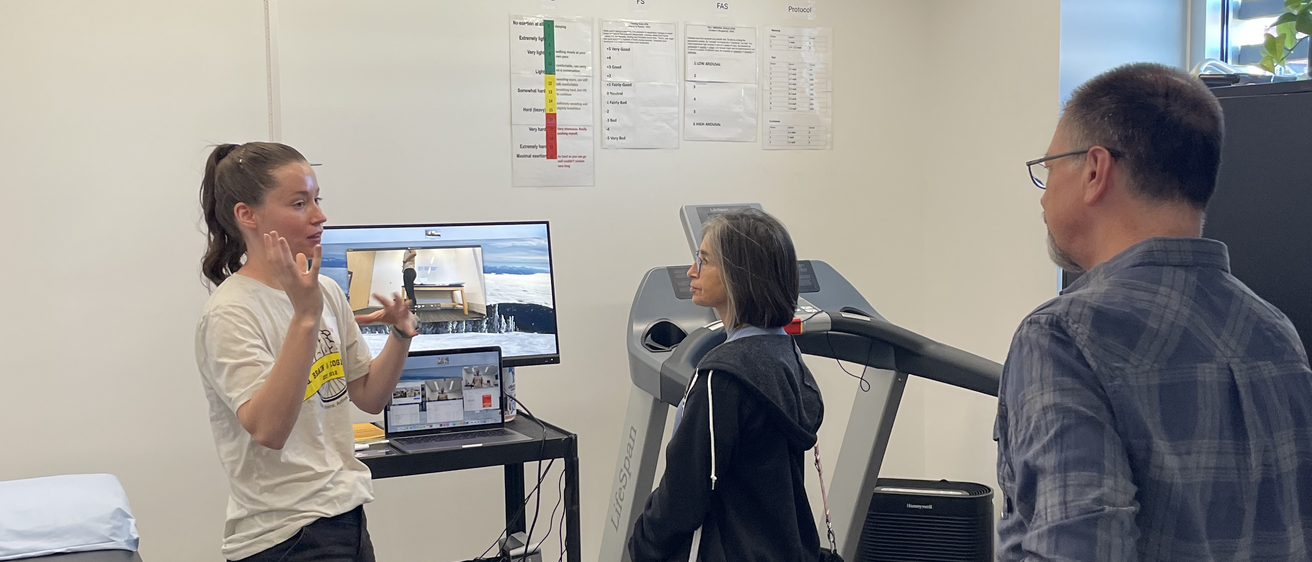
The idea for exploring ways to exercise at home came as a necessity to make sure that the BOOST-I research project could continue functioning in the winter, as both sites, Boston and Iowa, experience harsh winters. One component to the study is a 12-week exercise intervention, which requires participants to take part in 40 minutes of aerobic exercise 5 times a week. Most of the participants walk outside in order to meet this requirement. However, when the winter winds finally make their appearance in Iowa this will not be a practical mode of exercise. Additionally, participants are recruited from all over Eastern Iowa where easy access to a gym might not be available, limiting participants from being able to succeed in this study. Thus at-home exercises were developed to meet the demands of exercise training.
Creating your own circuit is an easy way to exercise in the warmth of your home, but continue to stay active. A circuit is a group of exercises that you do back-to-back for a certain number of repetitions. Making a circuit involves selecting exercises that you want to do from a list such as the list in figure 1, the duration of each exercise, the number of exercises in the circuit, and the number of repetitions through the circuit (figure 2). Figure 2 is an example template showing how a 2 circuit layout could incorporate both strength and cardio exercises. By adding in many types of movement there is the ability to grow strength in all movement patterns.
STRENGTH | |||
Jump Squats | Stairs/Step-Ups | High Knees in Place | Jumping Jacks |
Walking Lunges | Inch Worms | Butt Kicks | Seal Clap |
Burpees (modified) | Lateral Lunge Shuffle | Mountain Climbers | Scissor Jacks |
Reverse Lunges | Twisted Lunges | Crossover | Speed Skaters |
Up-Down Planks | Step-Out Squats | Jump Rope | Fast Feet |
Kettle Bell Swings | Repeater Knee | Side-to-Side | Jogging in Place |
Circuit 1: | THEN | Circuit 2: |
| Exercise 1: Cardio | Exercise 1: Strength | |
| Exercise 2: Strength | Exercise 2: Cardio | |
| Exercise 3: Cardio | Exercise 3: Strength | |
| Exercise 4: Strength | Exercise 4: Cardio | |
| Exercise 5: Cardio | Exercise 5: Strength | |
Benefits of Adding Strength Exercises into a Circuit
Many of our participants have the desire to increase their strength and incorporate strength into their exercise training. Traditional lifting does not allow for participants to reach a steady state heart rate, and thus does not meet the demands of the prescribed exercise training in BOOST-I. However, by incorporating strength exercises in a circuit workout, strength can be improved while still allowing the exercises to be aerobic. This can be done through dynamic strength exercises rather than static strength exercises. Dynamic strength exercises incorporate activation of many muscles through movements while static strength is the traditional way of doing strength exercises which is isolating a certain muscle group through a single movement, like a bicep curl. For example, an up-down plank is a great way to change a static exercise, a normal plank, and add a dynamic element that uses more muscle groups and increases the heart rate more. For an up-down plank stabilizing in a plank position engages the transverse and rectus abdominus. When going from the high plank to the low plank and vice versa, keeping a stable back causes the activation of the obliques, arm and shoulder muscles.
A main barrier for strength exercises is the perception that in order to build strength you need to use weights or equipment. This is a misconception, as the resistance that the human body produces is plenty to build up strength, especially to start (Lipecki & Rutowicz, 2015). For example, kettle bell swings are typically seen done with weight, but it is not necessary to experience the exercise’s benefits. A kettle bell swing is a hinge at the hips. This hinge uses core strength and lower back muscles like the erector spinae to stabilize the back. When swinging up you are using glutes to power that movement. Then the shoulders are also worked to keep the back straight (trapezius and rhomboids) and the deltoids are used to move your arms up and down. All of these muscles are still working even without a kettle bell or dumbbell. If you really want to add weight but do not have access to weights, a milk jug or water bottle filled with water can also be used as weights.
Finally, when just beginning to do strength based exercises, finding exercises that are easy to modify, but still get all of the benefits can be a challenge. Some ways that this can be done is to slow the exercises down (ex. Mountain climbers), break the exercise into different parts (ex. Jump squat), or to make the exercise lower impact. Burpees are a great example of an exercise that many shy away from because of its difficulty level. However, there are many modifications that can be made to make burpees easier. First off, taking away the push-up makes it easier and there is plenty of upper-body still in the exercise. Next, the jump back into a plank can be a challenge especially if core strength is an issue. Quickly stepping back into the high plank is a great way to slowly build up the core strength to eventually be able to do a jumpback. The jump can also be hard at first. A simple way to make any exercise low impact is to switch out a jump for a calf raise. This is still going to use all the same leg muscles, but not all the strain on the joints. Making simple changes like these can make a full body workout more accessible and you can work up to doing the full exercise as you get stronger.
Benefits of Adding Cardio Exercises into a Circuit
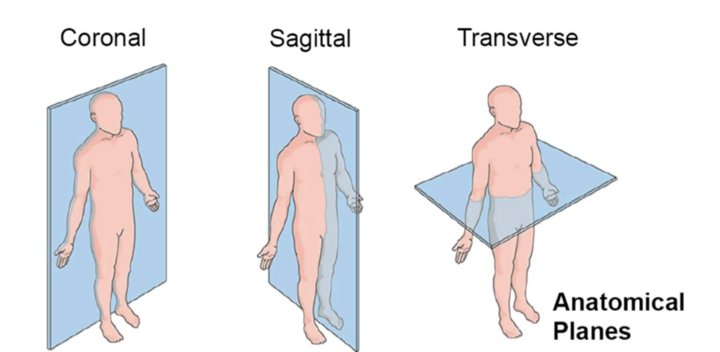
In the BOOST study when I first describe the expectation for the exercise training, the first modes of exercise that participants think of are treadmills, ellipticals, and stationary bikes. While these are great options, there are a vast amount of exercises that get your heart rate up that people do not think of as cardio. Cardio exercises are typically done in only one plane of motion. When walking on a treadmill you are only moving in the sagittal plane (front and back). This means that the muscles primarily used like the quadriceps and hamstrings are going to be strong. However, humans do not only move in the sagittal plane so incorporating exercises that utilize all planes can help strengthen all muscles and thus reduce the risk of injuries (Vincent et al., 2022) (figure 3). Speed skaters are great examples of movement in the coronal plane (side to side). When moving in different planes the abductors (muscles that move limbs away from midline), adductors (muscles that move limbs towards midline) and hip flexors will also gain strength. This increase in strength will overall improve movement patterns and decrease the risk of injury (Koźlenia & Domaradzki, 2021).
Doing cardio workouts can also increase strength in everyday movement. Many people think that cardio workouts will only increase strength of their cardiovascular system, but cardio can increase overall strength. Jumping jacks are a great example of how cardio exercises can improve strength far beyond just the cardiovascular system. One, jumping jacks require movement in the coronal plane which is automatically going to improve strength in the abductors and abductors. When adding a jump to the movement the gastrocnemius (calf), quadriceps and hamstring muscles are also going to improve in strength. These muscles are mostly used in sagittal plane movements. So, just doing a jumping jack can increase heart rate and improve cardiovascular health, but can also improve muscle strength overall, which in turn improves overall movement strength and function.
Progression
The design of exercise training programs for improving fitness demands that participants increase their heart rate throughout the weeks. Many participants state that this is a challenge to accomplish by just going on walks. Making a circuit is a great way to solve this problem as the circuit can progress through exercise training with you to meet the demands of higher target heart rates. In the later weeks participants can decrease the rest time between exercise to increase the demand on their body. Participants can also increase the number of exercises in the circuit, increasing the overall strength of their body. The increase in difficulty of the circuits allows for much greater overall strength that they would not be getting by just walking. Trying to increase heart rate by decreasing rest causes a greater mechanical stress on the muscles, which builds the strength in the muscles (Krzysztofik et al., 2019). This also helps build endurance so participants can do workouts for longer, building overall body strength to help improve health. This adaptability makes circuits a great workout for exercise training.
Key Take-Aways
Finding creative ways to stay active in the winter can be a challenge, but exploring at home workouts, like circuits, can help make it more accessible. Not only do circuits help maintain fitness but there are many hidden benefits from doing circuits. Moving in different planes increases overall strength, which can decrease the risk of injuries. To explore how to create your own circuits check out the videos above. For more winter training ideas check out these additional resources.
References