You may be eligible to join one of our ongoing studies
66-90 years old?
The BOOST Observational Study for Older Adults involves an in-person cognitive assessment session and wearing an activity monitoring device on the wrist for a week. There is no physical activity requirement.
PROJECT POOL FILLED
NO LONGER RECRUITING
40-65 years old?
The BOOST Observational Study, for participants working full-time (35 hours/week), involves both computerized testing and physical activity.
PROJECT POOL FILLED
NO LONGER RECRUITING
40-65 years old?
The BOOST Intervention Study, for participants working full-time (35 hours/week), involves both computerized cognitive training and physical exercise.
Lab News

Dr. Bryan Madero begins postdoc fellowship
Wednesday, July 1, 2026
The Health, Brain & Cognition Lab congratulates six-year team member Dr. Bryan Madero on his appointment as Postdoctoral Research Scholar in the Mallinckrodt Institute of Radiology at Washington University School of Medicine in St. Louis.
Press and Media
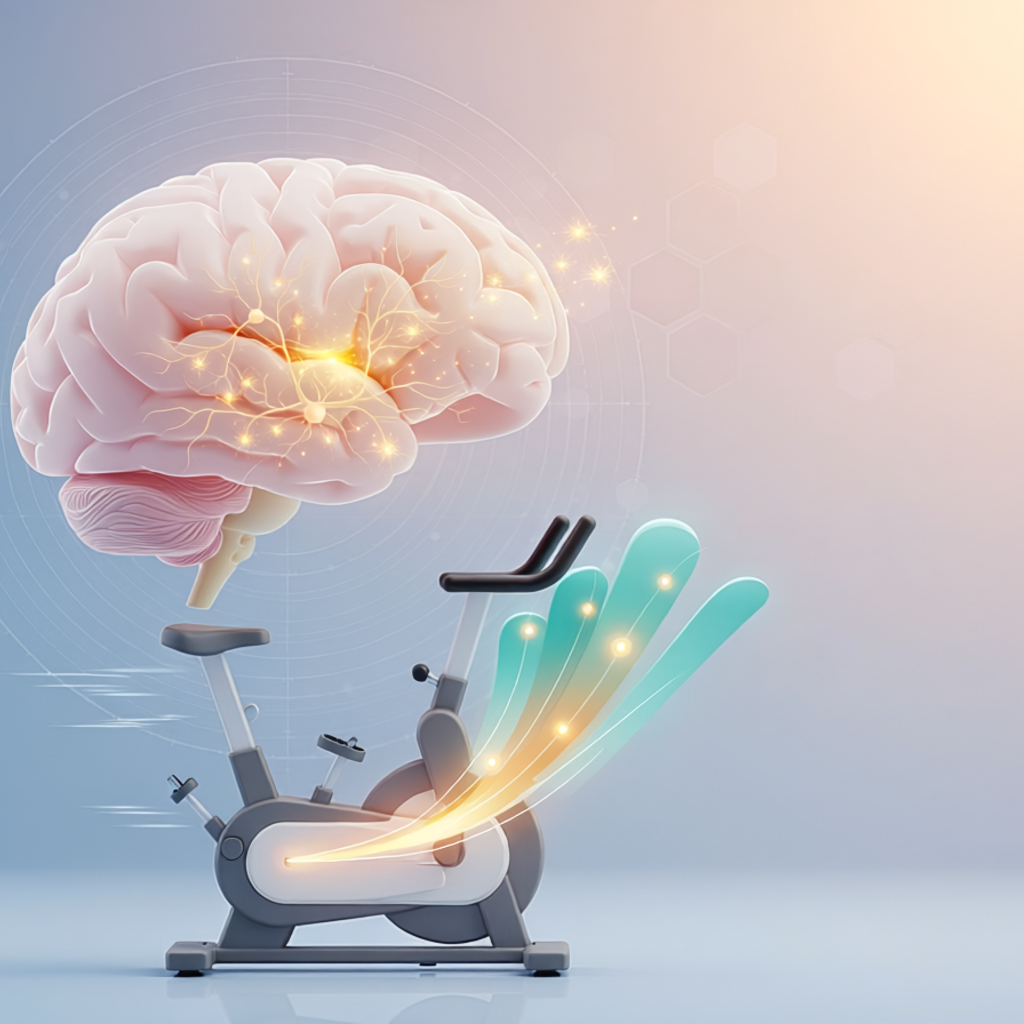
HBC Lab research shows exercise triggers memory-related brain ripples
Thursday, March 12, 2026
Read the Iowa Now story to learn about the Health, Brain & Cognition Lab study published online March 9 in the journal Brain Communications, part of Oxford Academic. More information is available in Lab Director Dr. Michelle Voss's interviews with CBS Radio and the BBC.
Blog

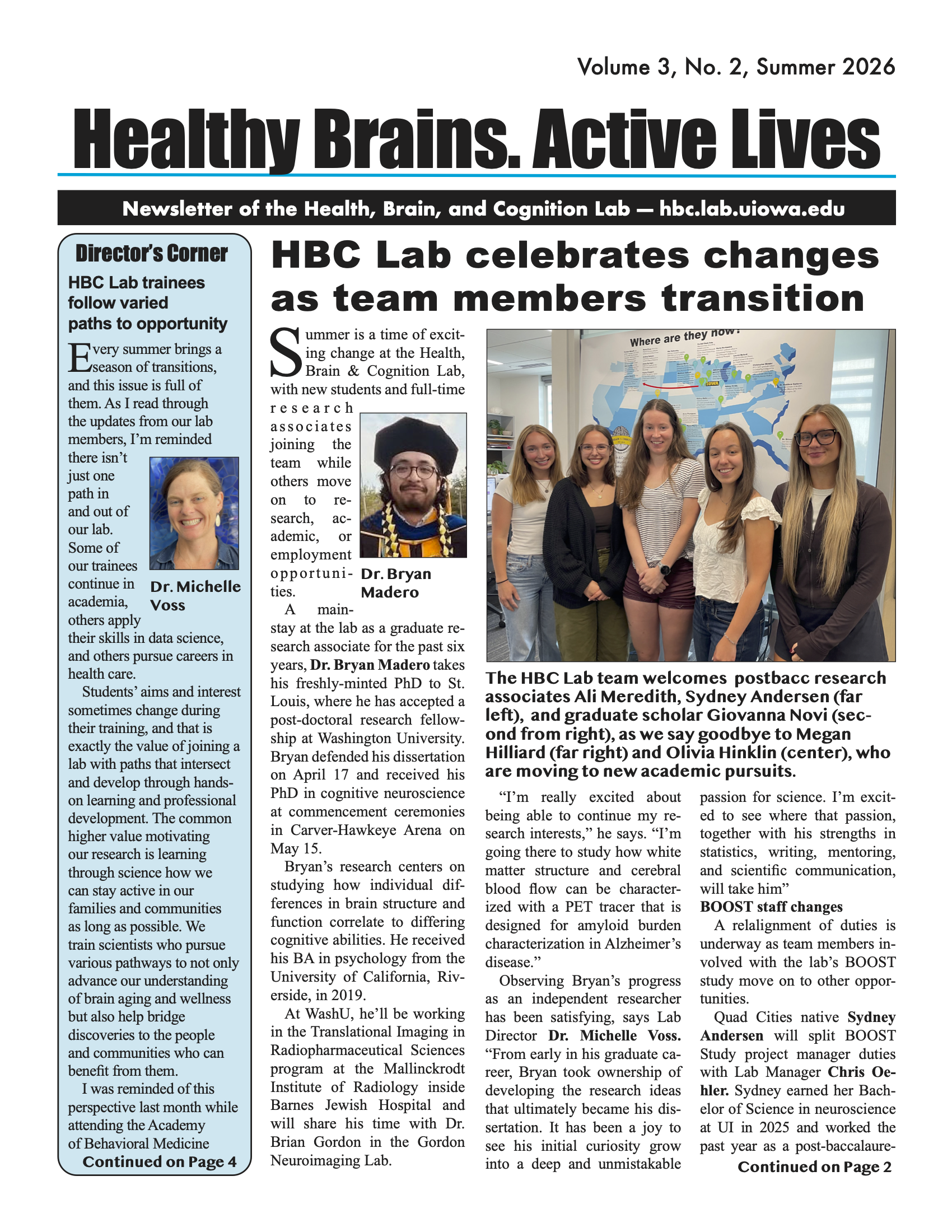
Using GIS mapping to aid brain aging research
Tuesday, September 1, 2026
GIS mapping is an inexpensive, effective tool offering seemingly endless possibilities to improve research. The Health, Brain & Cognition Lab has used GIS maps to better understand where our study participants come from and identify underrepresented areas. In the future, we hope to use zip code and neighborhood maps for filling in gaps in participation, to expand our outreach to underrepresented areas, and to access to more unique and current datasets allowing us to create maps to help us tailor research projects to specific age groups.